
Tricolored Heron: Florida's Fast-Moving Blue, Purple and White Wader |
This state-designated Threatened heron is smaller and quicker than a Great Blue, with a blue-gray back, purple-maroon neck and a clean white belly. |
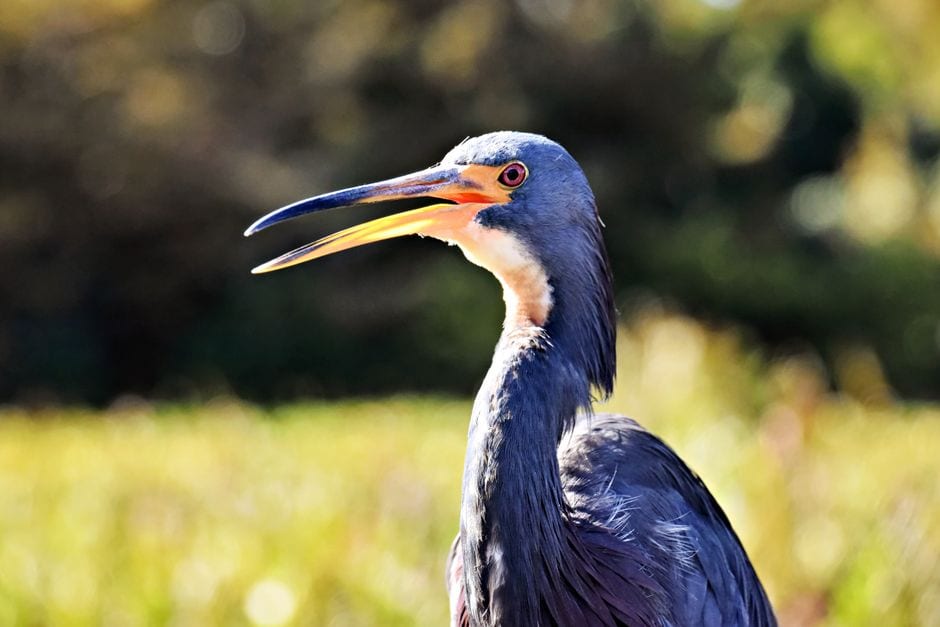
The Tricolored Heron looks elegant standing still, but watch one feed and the personality changes completely.
These slender herons often run, stop, turn and lunge through shallow water while chasing small fish — a much more active hunting style than the slow stalking of many other wading birds.
The white belly is one of the best field marks. Adults have a blue-gray back and wings, a purple-maroon neck and head, and white running down the front of the neck into the belly.
They are much smaller than Great Blue Herons and usually look slimmer and more delicate.
Tricolored Herons live in both fresh and saltwater wetlands, including estuaries, mangroves, marshes, lagoons and tidal areas.
Florida considers the Tricolored Heron a state-designated Threatened species.
FWC lists wetland development, disturbance, pollutants and loss of productive feeding habitat among the concerns facing the species.
They often nest in mixed colonies with other wading birds, building stick nests in shrubs or trees over or near water.
Southwest Florida has protected nesting areas where Tricolored Herons occur alongside Little Blue Herons, night-herons and other colonial waterbirds.
The easy identification: a slim blue-gray and purple heron with a bright white belly, moving quickly through shallow water, is a strong Tricolored Heron candidate. |
Trying to identify a Tricolored Heron?
Look for the white belly and quick feeding style.
Open the Florida guide to compare your bird.
0 Comments
Join the conversation
Be the first to comment
Share your thoughts above.