
Swallow-Tailed Kite: Florida's Black-and-White Summer Acrobat Heads South for Winter |
By October, the spectacular black-and-white kites that fill Florida’s summer skies have largely migrated to South America — and that seasonal disappearance is normal. |
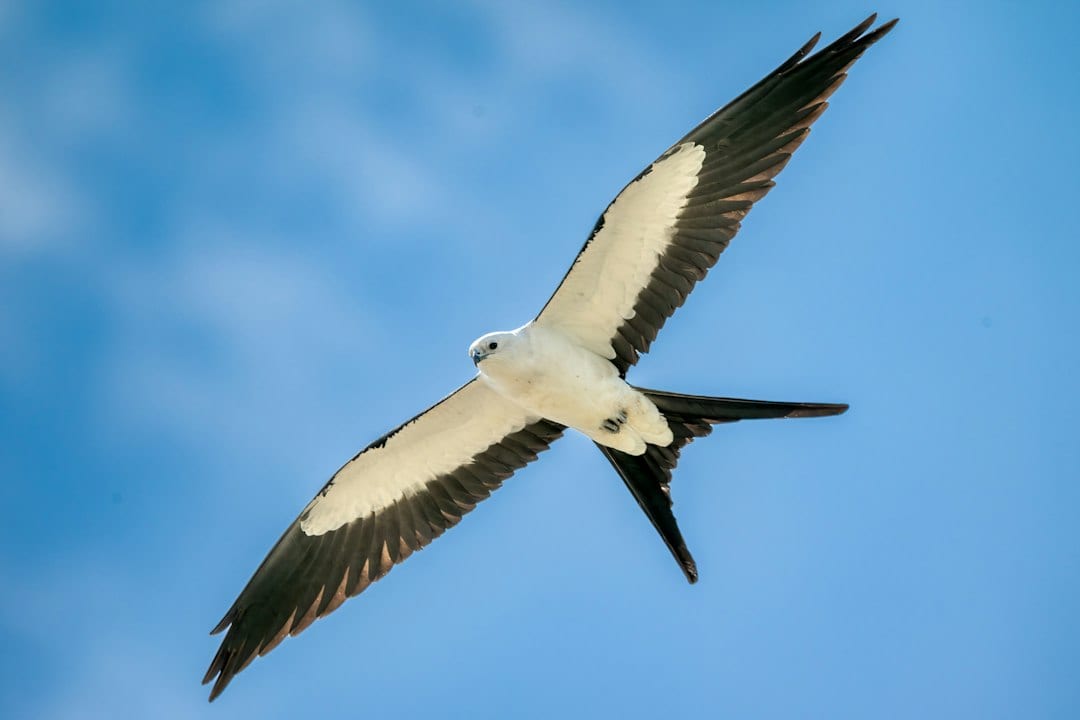
If the elegant black-and-white kites that floated over Florida all summer seem to have disappeared, they probably have.
Swallow-tailed Kites arrive in Florida in early March to breed, but by midsummer they begin gathering in communal roosts before migrating to wintering grounds in South America.
By October, most have left the United States. That makes their absence a seasonal signal rather than a cause for concern.
These birds are unmistakable when present: bright white head and underparts, glossy black wings and back, and a deeply forked tail that twists and turns like a rudder.
They spend much of the day airborne, catching dragonflies and other flying insects or snatching frogs, lizards and small animals from treetops without landing.
FWC says Florida is the heart of the species’ current U.S. range. Kites favor swamps, pine forests, cypress areas, wet prairies and other lowland habitats with tall nesting trees and abundant prey.
The calendar is useful for identification. A deeply forked black-and-white raptor over Florida in spring or summer strongly suggests a Swallow-tailed Kite; by late fall, sightings become much less expected because the birds have moved south.
They will return again as winter ends and Florida’s breeding season begins.
The October takeaway: the empty space where the kites used to soar is part of Southwest Florida’s seasonal rhythm. Watch for their return beginning around March. |
Wondering where Florida's Swallow-tailed Kites went?
By October, their absence is expected.
Open the Florida species guide for the full seasonal cycle.
0 Comments
Join the conversation
Be the first to comment
Share your thoughts above.