
Six-Lined Racerunner: Florida’s Native ‘Sand Streak’ Lizard |
Fast, striped and native, this ground-running lizard lives in dry open habitats across Florida — including Gasparilla Island. |
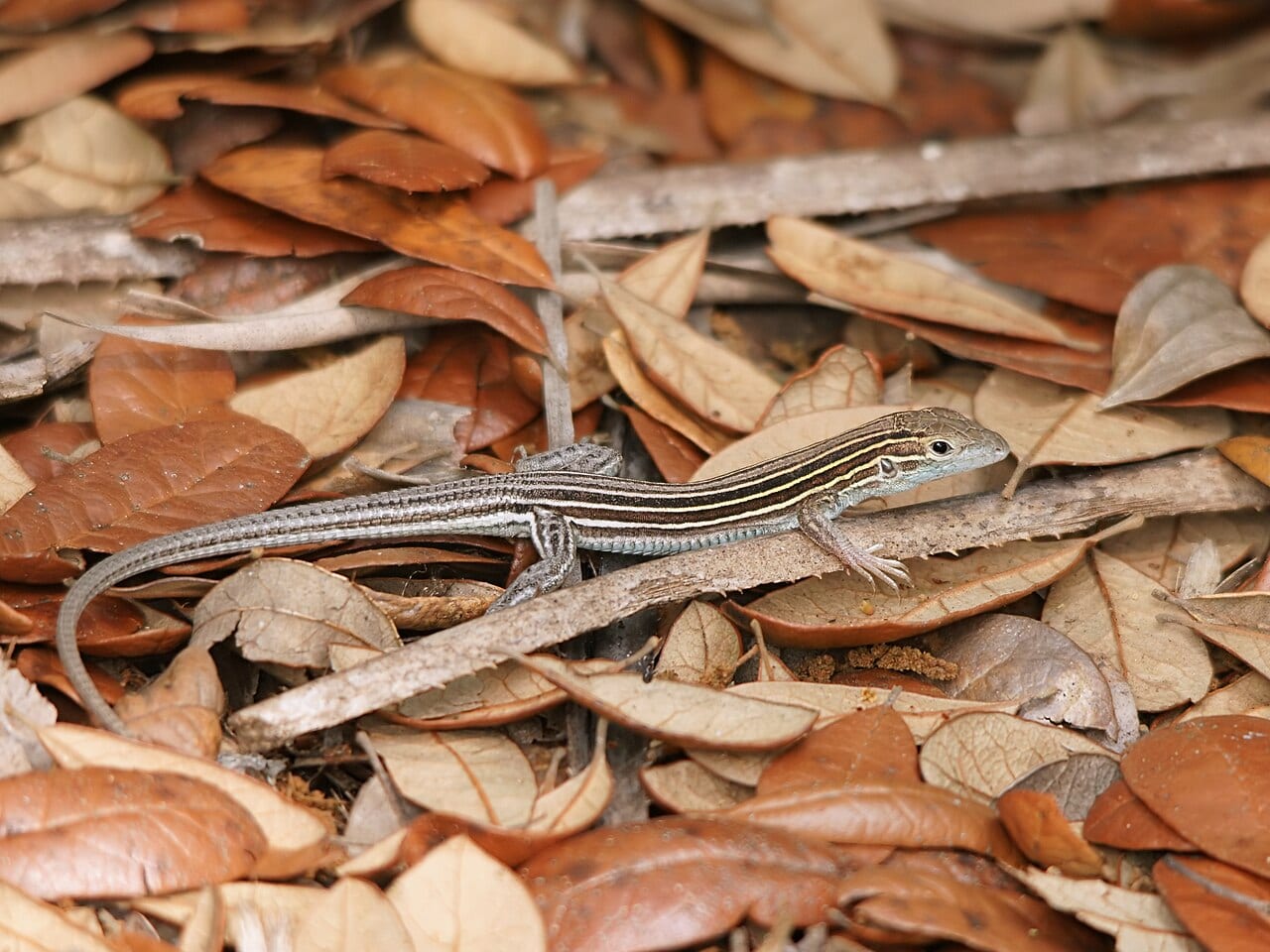
The six-lined racerunner is one of Florida’s fastest native lizards, and many people see only a blur before it disappears into grass or sand.
The species is built for life on the ground in hot, open places such as scrub, dry flatwoods, sandhills, dunes and sunny disturbed areas.
Six pale stripes running lengthwise down the dark back are the field mark to remember.
The stripes remain visible as the lizard matures, while adult males can develop bluish coloration underneath during the breeding season.
Adults are usually under a foot long including the tail, but their speed makes them seem larger when they shoot across a path.
The old Florida nickname “sand streak” fits.
Racerunners actively hunt during the day instead of waiting motionless for prey.
They search loose soil, leaf litter and low vegetation for insects, spiders and other small invertebrates.
This is also a genuinely local Suncoast reptile.
UF/IFAS lists six-lined racerunners among the native lizards found on Gasparilla Island, alongside nonnative brown anoles and the island’s invasive black spiny-tailed iguanas.
That contrast makes the species useful for learning that not every unfamiliar fast-moving lizard is invasive.
Six-lined racerunners are native wildlife and should be left alone.
A small lizard racing across dry sandy ground with six clear light stripes is much more likely to be a native racerunner than an exotic invader.
The Wild Suncoast clue: count the stripes, notice the ground-running behavior and remember that speed is part of this lizard’s identity. |
Fast striped lizard on sandy ground? Count the lines.
This is native Florida wildlife, not an invasive lizard.
0 Comments
Join the conversation
Be the first to comment
Share your thoughts above.