
Peninsula Cooter: Florida's Native Basking Turtle With the Yellow Stripes |
This large native freshwater turtle spends hours sunning on logs and banks — but Florida prohibits taking cooters from the wild because they resemble an imperiled species. |
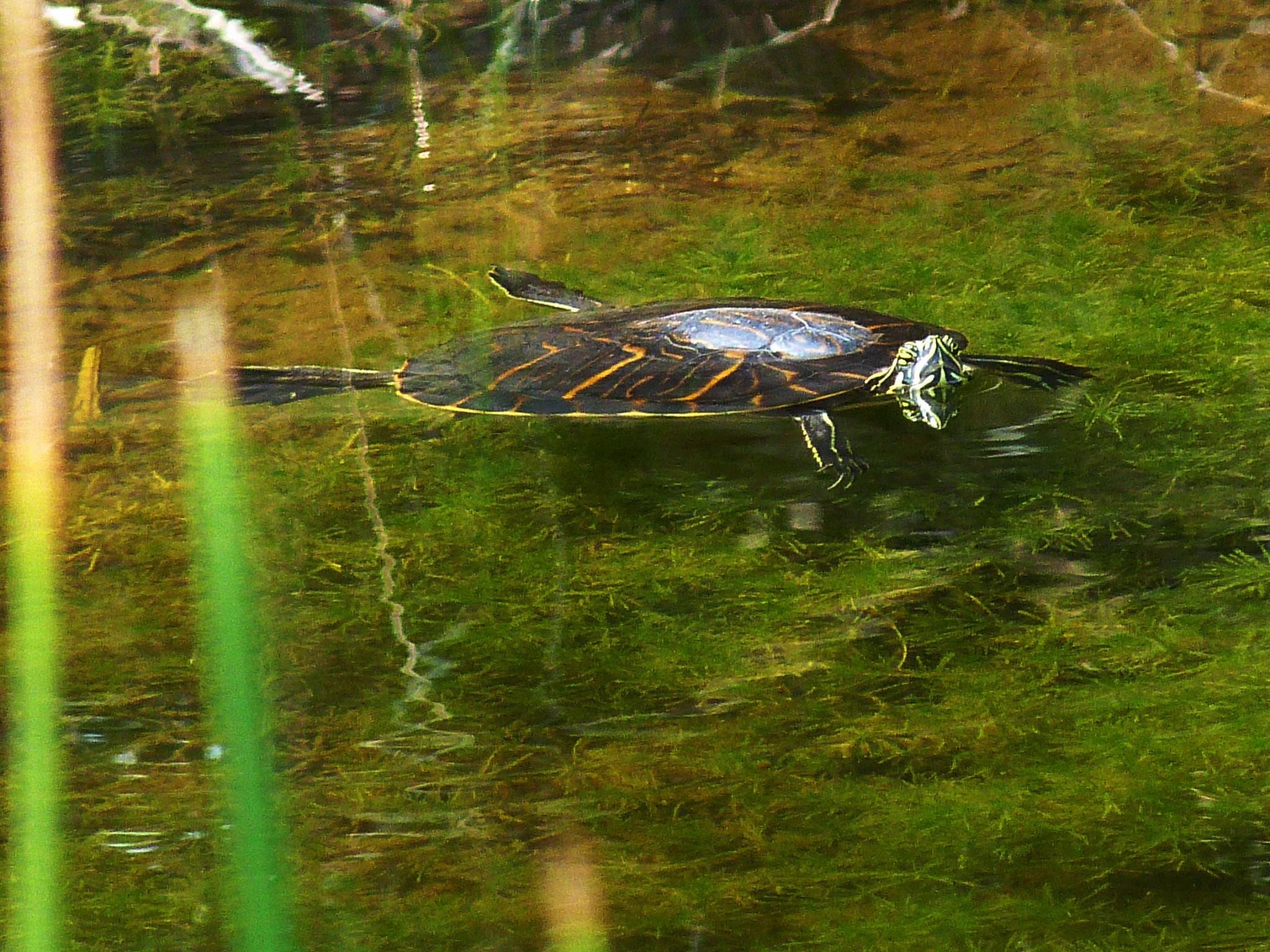
Peninsula cooters are the big yellow-striped turtles people often see stacked on logs around Florida ponds, canals and slow-moving water.
They are native to Florida and can become fairly large, with females typically much bigger than males.
Look for yellow or cream stripes on the head, neck and legs and a mostly plain yellow belly.
The dark upper shell carries lighter yellow markings that can become harder to see on older animals.
Like many freshwater turtles, peninsula cooters spend long periods basking in the sun on logs, banks and other surfaces close to water.
They are mostly plant eaters as adults, feeding on aquatic vegetation and algae, although younger turtles may eat more animal matter.
The confusing part is that Florida has several similar-looking cooters and sliders.
Florida red-bellied cooters can show warmer reddish or orange coloration underneath, while nonnative red-eared sliders are famous for the red patch behind the eye.
Individual turtles seen from a distance can still be difficult to identify with certainty.
There is also an important legal point.
FWC currently prohibits taking all cooters in the genus Pseudemys from the wild because they can resemble the imperiled Suwannee cooter.
That means a native peninsula cooter basking beside your neighborhood pond is wildlife to observe, photograph and leave where it is.
If one is crossing a road, help only if it can be done safely and move it in the direction it was already traveling rather than relocating it to a different pond.
Do not take a basking turtle home just because it looks common.
The Wild Suncoast clue: large freshwater turtle + yellow head and neck stripes + plain yellow belly should put a native cooter high on the list. |
Cooter, slider or another pond turtle?
Observe first and leave it where it belongs.
Use the current FWC rules before handling or collecting any freshwater turtle.
0 Comments
Join the conversation
Be the first to comment
Share your thoughts above.