
Northern Harrier: The Low-Flying Marsh Hawk That Arrives With Cooler Weather |
Watch for a slim hawk gliding low over marshes and fields with its wings held in a shallow V and a bright white rump patch flashing behind it. |
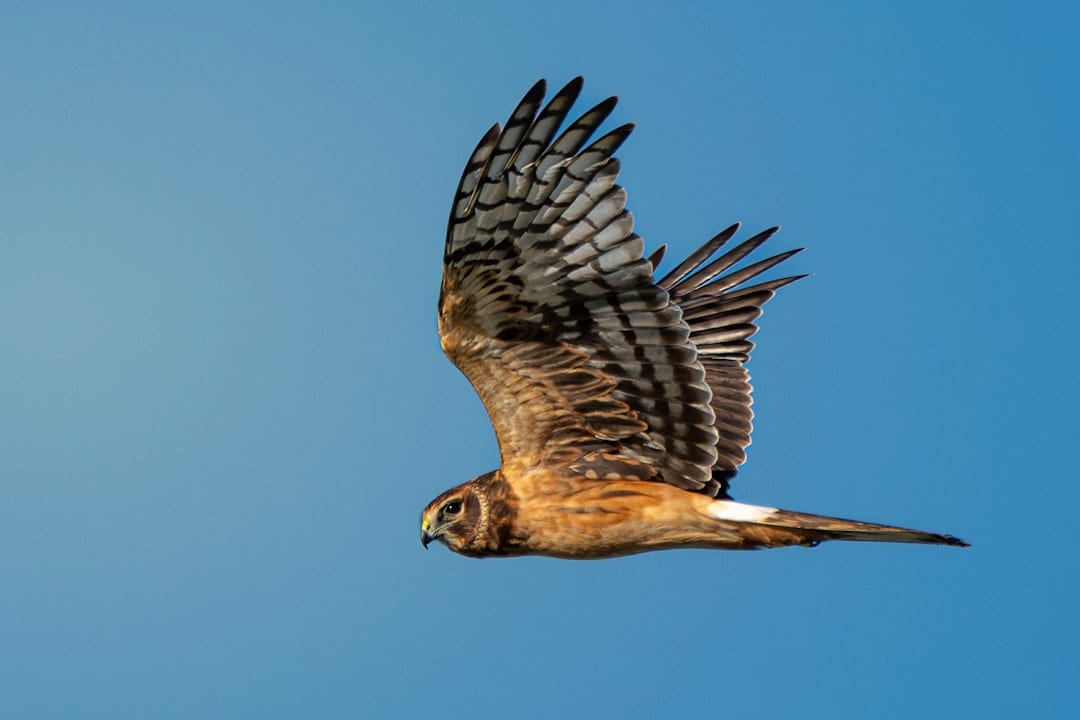
Northern Harriers are one of the easiest hawks to recognize by the way they fly.
Instead of perching high and watching from above, they often cruise only a few feet over marshes, wet prairies and open fields, rocking slightly from side to side.
Look for the wing posture and white rump. Harriers hold their long wings in a shallow V and show a conspicuous white patch at the base of the tail.
Adult males are gray above and pale below. Females and young birds are brown, but both sexes share the same long-winged shape and white rump patch.
The face is unusually owl-like for a hawk. A facial disk helps funnel sound toward the ears, allowing harriers to use hearing as well as vision when hunting mice and other small animals hidden in vegetation.
In Florida, the cooler season is the time to look. Cornell recommends watching open grasslands, marshes and fields from fall through spring.
That makes October the beginning of a useful Wild Suncoast watch period, especially around broad wetlands and open ranch or prairie country.
Northern Harriers nest on the ground farther north, but wintering birds in Florida are primarily here to hunt and feed.
The seasonal takeaway: a slim hawk flying low over a marsh with raised wings and a flashing white rump is one of the clearest signs that Florida’s cooler-season raptors are arriving. |
See a hawk skimming low over a marsh?
Watch flight style before plumage.
Open Cornell’s live guide for male, female and juvenile views.
0 Comments
Join the conversation
Be the first to comment
Share your thoughts above.