
Magnificent Frigatebird: The Giant-Winged Coastal Bird That Barely Flaps |
Long angular wings, a deeply forked tail and effortless soaring make this tropical coastal bird one of the most dramatic silhouettes over Florida water. |
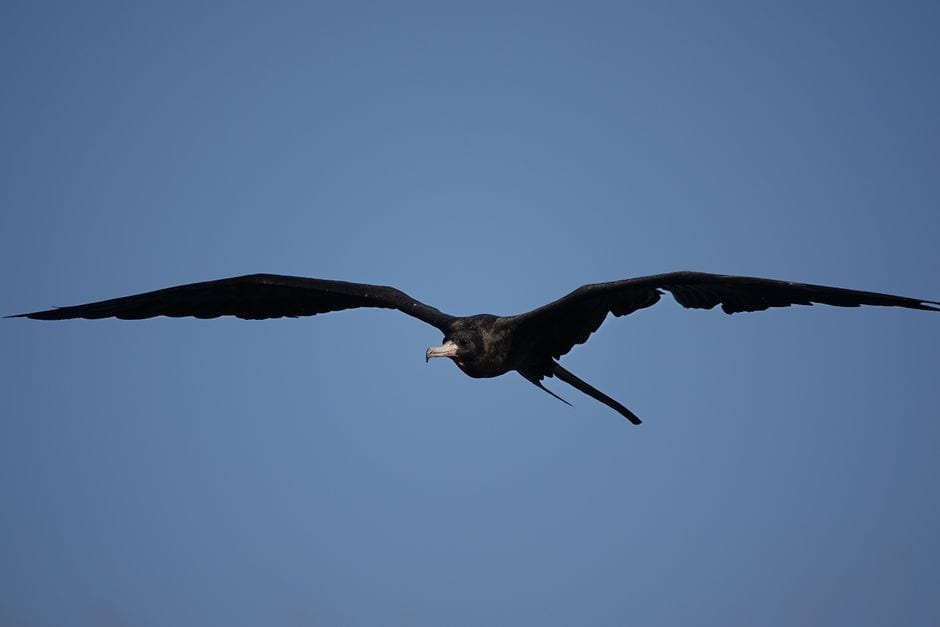
If a huge dark bird seems to hang almost motionless above the Gulf, riding the air on long narrow wings, you may be looking at a Magnificent Frigatebird.
These tropical seabirds are built for soaring. Their wings are extremely long and angular, their tails are deeply forked, and they can stay aloft for long stretches with very little flapping.
The silhouette is usually the first clue. From below, the bird can look almost pterodactyl-like: long wings, tiny-looking body and a narrow forked tail trailing behind.
Adult males are almost entirely black and can develop a bright red throat pouch during courtship. Females are larger and show a white breast.
Magnificent Frigatebirds spend most of their lives in the air over warm coastal and tropical waters. They rarely sit on the water because, unlike many seabirds, their feathers are not well suited to becoming waterlogged.
They are famous aerial thieves. Frigatebirds may chase gulls, terns and other seabirds until the other bird drops or regurgitates food, which the frigatebird snatches in midair.
They also catch their own fish and squid near the surface without making the headfirst plunge associated with Brown Pelicans.
Along Florida’s coast, afternoon can be a good time to look up because rising warm air and coastal winds help these birds soar efficiently.
Some birds remain in the region while others move toward more tropical waters after breeding, so sightings can vary through the year.
The easy identification: enormous angular wings, effortless soaring and a deeply forked tail over coastal water strongly point to a Magnificent Frigatebird. |
See one soaring over the coast?
Start with the silhouette.
Open the species guide to compare what you saw.
0 Comments
Join the conversation
Be the first to comment
Share your thoughts above.