
Little Blue Heron: The Florida Heron That Starts Life White |
Adults are slate-blue and purple-maroon, but young Little Blue Herons begin life almost entirely white — one reason this threatened Florida wader can be easy to misidentify. |
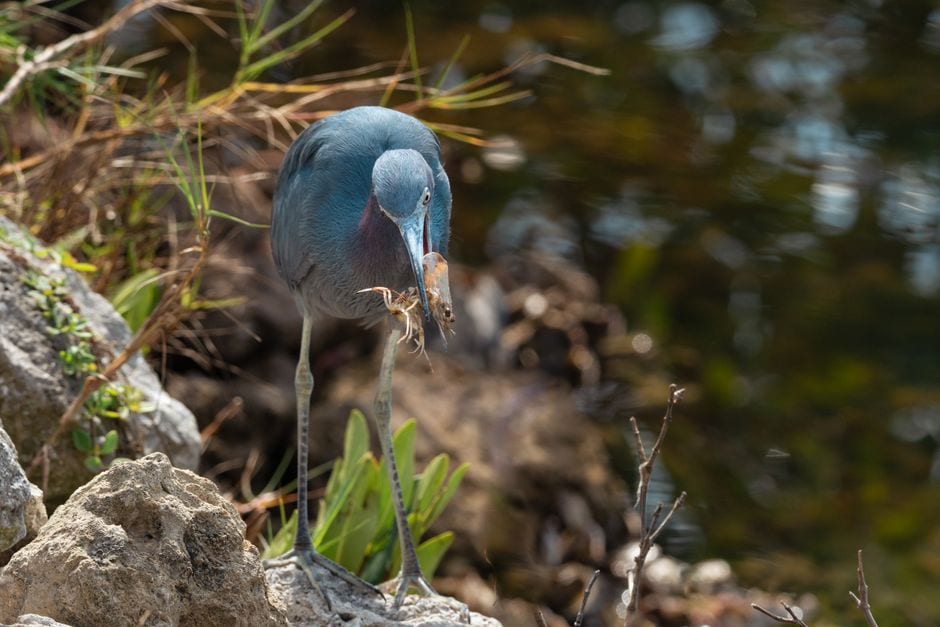
The Little Blue Heron has one of Florida’s best bird-identification surprises: young birds are white.
Adult Little Blue Herons are small, elegant waders with slate-blue bodies and purple-maroon heads and necks. But juveniles are almost completely white during their first year.
That means a white bird at a Southwest Florida pond is not automatically an egret. Young Little Blue Herons can be separated by their slower, more deliberate feeding style and their two-toned bills.
As they mature, the birds molt from white into blue. During that transition they can look patchy white-and-blue — a stage birders often call “calico.”
Adults usually forage alone or in small numbers along shallow freshwater and brackish wetlands, stalking fish, amphibians, shrimp and aquatic insects.
In Florida, this is not just a common-identification story. The Little Blue Heron is a state-designated Threatened species.
FWC identifies habitat loss, disturbance at nesting and feeding sites, reduced prey and environmental contamination among the concerns facing the species.
Little Blue Herons nest in colonies, often alongside other herons, egrets and ibises. Those colonies need space from people, boats and repeated disturbance.
The easy identification: an adult is dark slate-blue with a purplish head; a juvenile is white with a two-toned bill; and a patchy white-and-blue bird may be a Little Blue Heron changing into adult plumage. |
Is that white bird really an egret?
Juveniles are white.
Open the official Florida guide before deciding what you saw.
0 Comments
Join the conversation
Be the first to comment
Share your thoughts above.