
Green Heron: Florida's Small Wetland Hunter That Sometimes Uses Bait |
Small, dark and easy to miss, Green Herons hunt from pond edges, mangroves and canals — and some actually drop objects on the water to lure fish closer. |
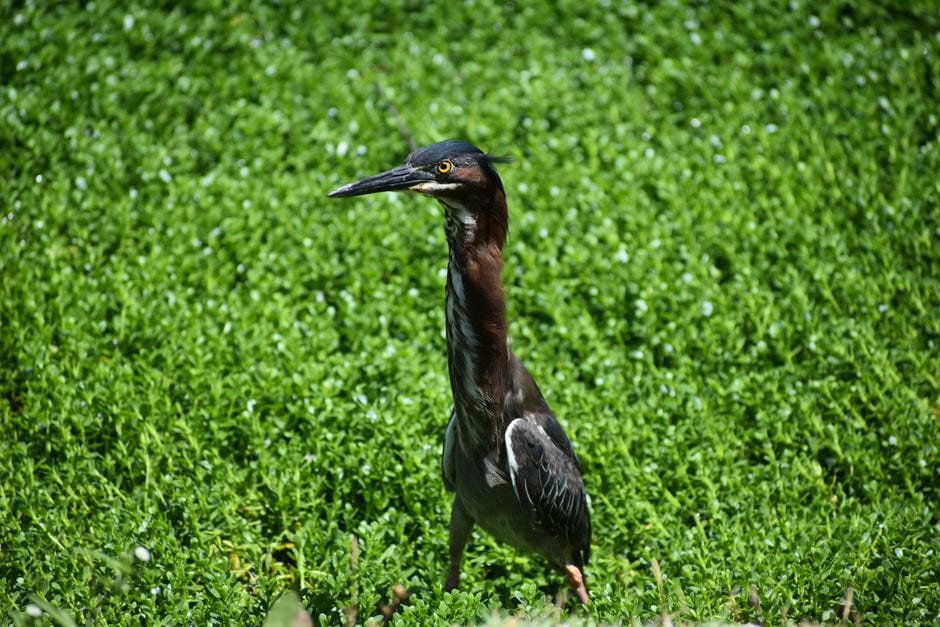
Green Herons are easy to overlook because they are much smaller and more compact than the tall herons most people picture.
They often sit hunched along a pond, canal, mangrove edge or wooded shoreline, waiting for fish to move within striking distance.
Up close, adults show a dark greenish back, rich chestnut neck and a dark cap that can lift into a short crest.
One of their most remarkable behaviors is tool use. Green Herons have been documented dropping insects, feathers, twigs or other small objects onto the water as bait to attract fish.
They then wait for the fish to approach before striking.
Green Herons eat fish, frogs, aquatic insects and other small prey and usually forage alone.
Florida supports Green Herons year-round, while birds from farther north migrate south during late summer and fall, so October can bring additional movement through wetlands.
Listen as well as look. A startled Green Heron may give a sharp, explosive call as it launches from hidden vegetation.
They nest in shrubs and trees near water, sometimes alone and sometimes near other wading birds.
The easy identification: a small, stocky heron with a dark green back, chestnut neck and low crouched hunting posture is likely a Green Heron. |
See a small dark heron crouched at the water's edge?
Small size is the first clue.
Open the guide to compare shape, colors and behavior.
0 Comments
Join the conversation
Be the first to comment
Share your thoughts above.