
Green Anole: Florida's Native 'Chameleon' That Can Turn Brown |
Florida's only native anole can shift from bright green to brown or gray — which is why color alone does not tell you whether a yard lizard is native. |
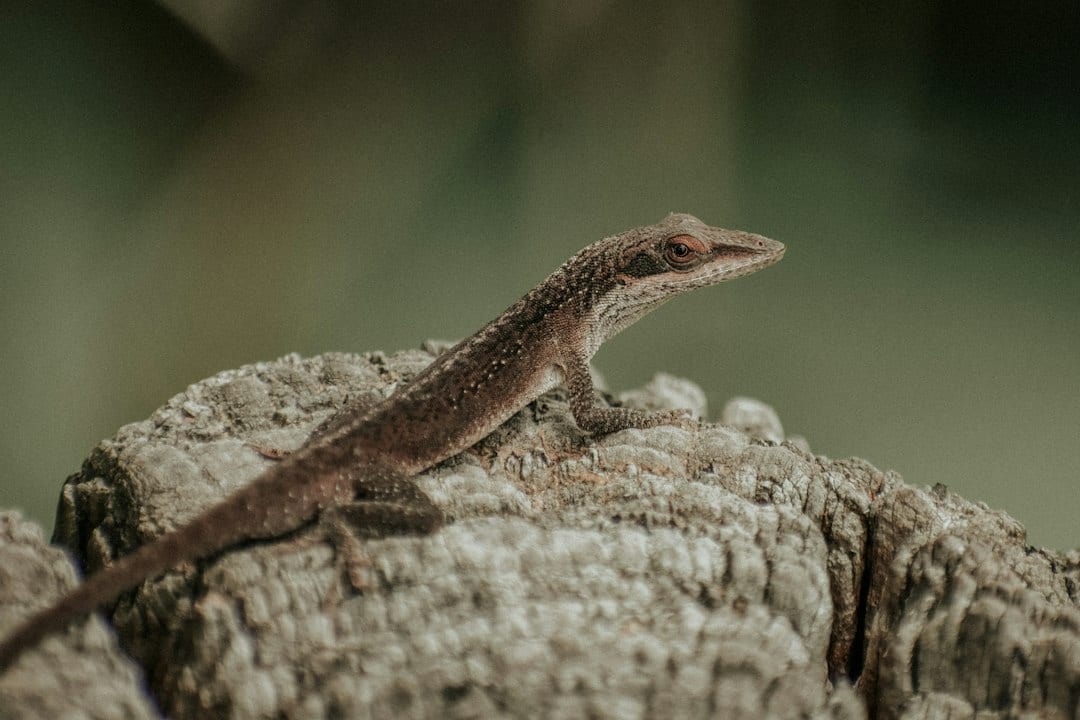
The green anole is Florida’s only native anole, and it is much easier to misidentify than its name suggests.
Green anoles can change from bright green to brown or gray, which is why a brown lizard is not automatically a nonnative brown anole.
Shape and pattern are better clues than color.
Green anoles have a long, slender body, a pointed snout and expanded toe pads that help them climb vegetation, fences and walls.
Most males have a pink throat fan, called a dewlap, although males in southwestern Florida often show a gray or dull-green dewlap instead.
Females may have a thin pale stripe running down the back.
The biggest source of confusion is the introduced brown anole.
Brown anoles never turn green and usually show heavier patterning, a shorter, blunter head and an orange or red-orange dewlap with a yellow border.
Native green anoles and introduced brown anoles often live in the same neighborhoods, but they tend to divide the habitat differently.
Green anoles are often pushed higher into shrubs and trees where brown anoles are abundant.
That means a homeowner may think the native lizards vanished when they have actually shifted upward into more vertical habitat.
You can make a yard friendlier to native green anoles by maintaining shrubs, trees and layered vegetation that offer insects, shade and hiding places.
Avoid broad pesticide use when possible because insects are the food base for these small native predators.
Green anoles are beneficial native wildlife, not pests that need to be removed.
If you see one turn brown, that color change is normal and does not mean the lizard suddenly became a different species.
The Wild Suncoast clue: a slender, long-snouted anole that can turn green is the native one. |
Green anole or brown anole?
The native green anole can be brown.
Open the comparison guide before deciding which one you saw.
0 Comments
Join the conversation
Be the first to comment
Share your thoughts above.