
Great Blue Heron: The Tall Blue-Gray Hunter Along Florida Waterways |
One of Florida’s most familiar wetland birds, the Great Blue Heron hunts fish, frogs, reptiles and even small mammals from ponds, canals, bays and roadside ditches. |
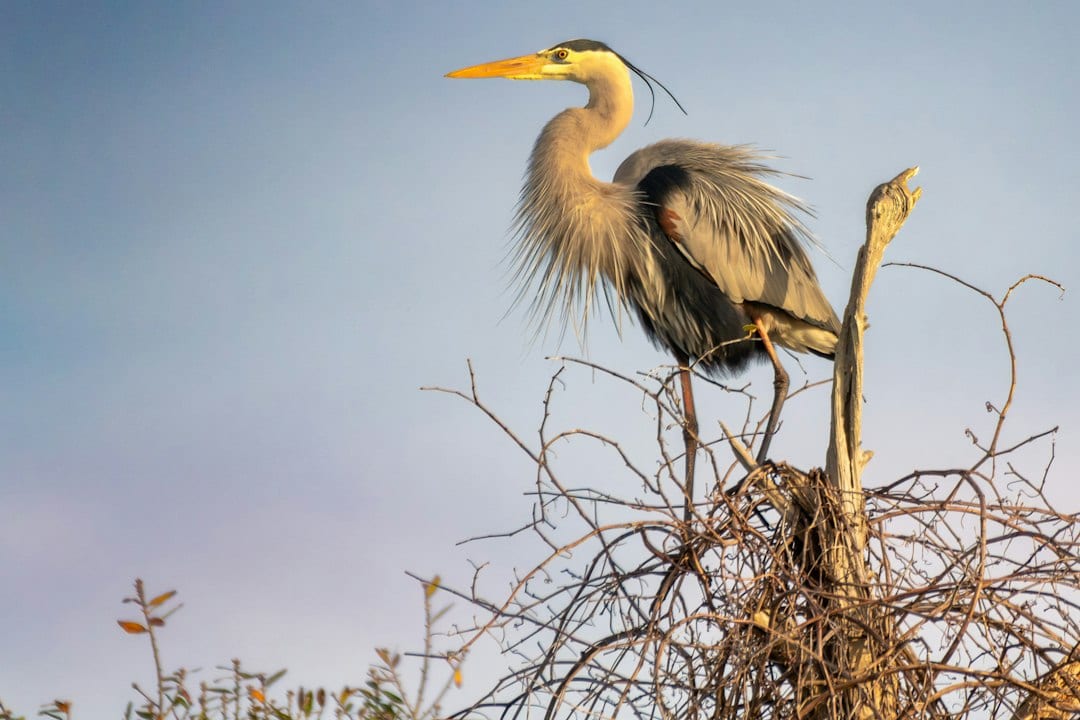
Few Florida wetland birds are as instantly recognizable as a Great Blue Heron.
These tall blue-gray birds can stand more than four feet high and may seem almost motionless while they wait for prey along a pond, canal, ditch, mangrove edge or shoreline.
The long S-shaped neck is a key clue. When standing, the neck may look stretched or partly folded. In flight, however, Great Blue Herons pull the neck back against the body while their long legs trail behind.
They feed on fish, frogs, snakes, lizards, insects and small mammals, striking with a rapid thrust of the bill after long periods of patient watching.
Great Blue Herons are present in Florida year-round, but fall migration can also bring additional birds south from northern breeding areas.
That makes October a good time to notice them. Some familiar local birds stay put while migrants move through wetlands and coastal areas.
These herons nest in trees, often in colonies with other wading birds. Colony sites can be surprisingly noisy and active despite the birds’ solitary hunting style.
Give nesting or roosting groups plenty of distance. Repeated disturbance can cause birds to abandon valuable feeding or nesting habitat.
The easy identification: very large size, blue-gray body, long yellowish bill, black head stripe and a neck tucked back in flight point strongly to a Great Blue Heron. |
Trying to identify the giant heron at your pond?
Check the neck and overall size.
Open the field guide to compare what you saw.
0 Comments
Join the conversation
Be the first to comment
Share your thoughts above.