
Florida Red-Bellied Cooter: The Native Turtle With the Warm-Colored Belly |
Reddish-orange shell markings and a warm-toned belly help identify this native pond turtle — and Florida law says cooters should stay in the wild. |
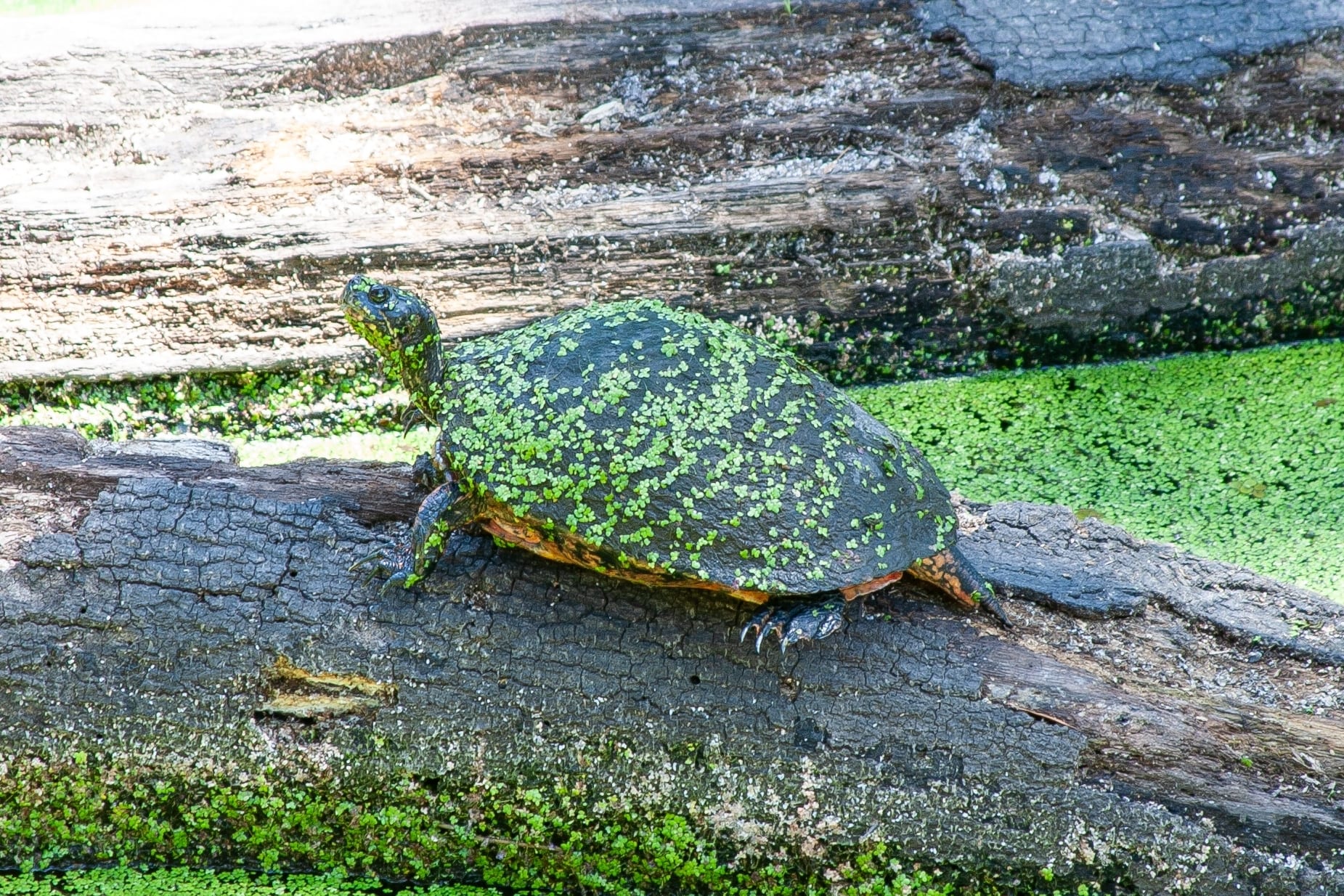
Florida red-bellied cooters are native freshwater turtles that turn ordinary neighborhood ponds into surprisingly good wildlife-watching spots.
Adults are large basking turtles with dark, highly domed shells marked by reddish to yellow-orange vertical lines.
The lower shell, or plastron, carries the warm orange-red coloration that gives the species its common name.
Yellow or cream stripes on the head, neck and legs place it firmly in Florida’s cooter group.
That can make identification tricky because peninsula cooters and other native cooters share the same striped head and basking behavior.
The red-bellied species is easiest to recognize when the reddish shell pattern or warm-toned belly can be seen clearly.
These turtles spend much of their time in freshwater ponds, lakes, canals and slow-moving water, often climbing onto logs or banks to warm themselves in the sun.
Seeing several piled together on one basking log is normal turtle behavior, not a sign that they are trapped.
Adults eat large amounts of aquatic vegetation and algae, making them part of the everyday ecology of Florida freshwater systems.
Females eventually leave the water to lay eggs on land, which is why large turtles sometimes appear in yards or cross roads far from the nearest visible pond.
Florida protects all cooters from take from the wild.
That protection is partly practical because several cooter species can be difficult to separate and one Florida cooter is covered by the state’s imperiled-species management program.
If a cooter is crossing a road and you can help without putting yourself in traffic, move it only in the direction it was already traveling and release it immediately once it is out of danger.
Do not move a healthy turtle to a different pond, even when the place it is heading does not make sense to us.
Wildlife officials also ask residents to report sick or dead freshwater turtles because a virus has been detected in Florida cooter populations.
The Wild Suncoast clue: yellow-striped head, domed dark shell and reddish-orange markings point toward a Florida red-bellied cooter. |
See a cooter crossing the road? Help it go where it was already going.
Florida cooters are protected from take.
Use current FWC turtle guidance before handling or moving one.
0 Comments
Join the conversation
Be the first to comment
Share your thoughts above.