
Florida Red-Bellied Cooter: The Native Pond Turtle With Orange in Its Shell |
This large native cooter lives in ponds, canals and marshes across peninsular Florida, and current state rules prohibit taking cooters or their eggs from the wild. |
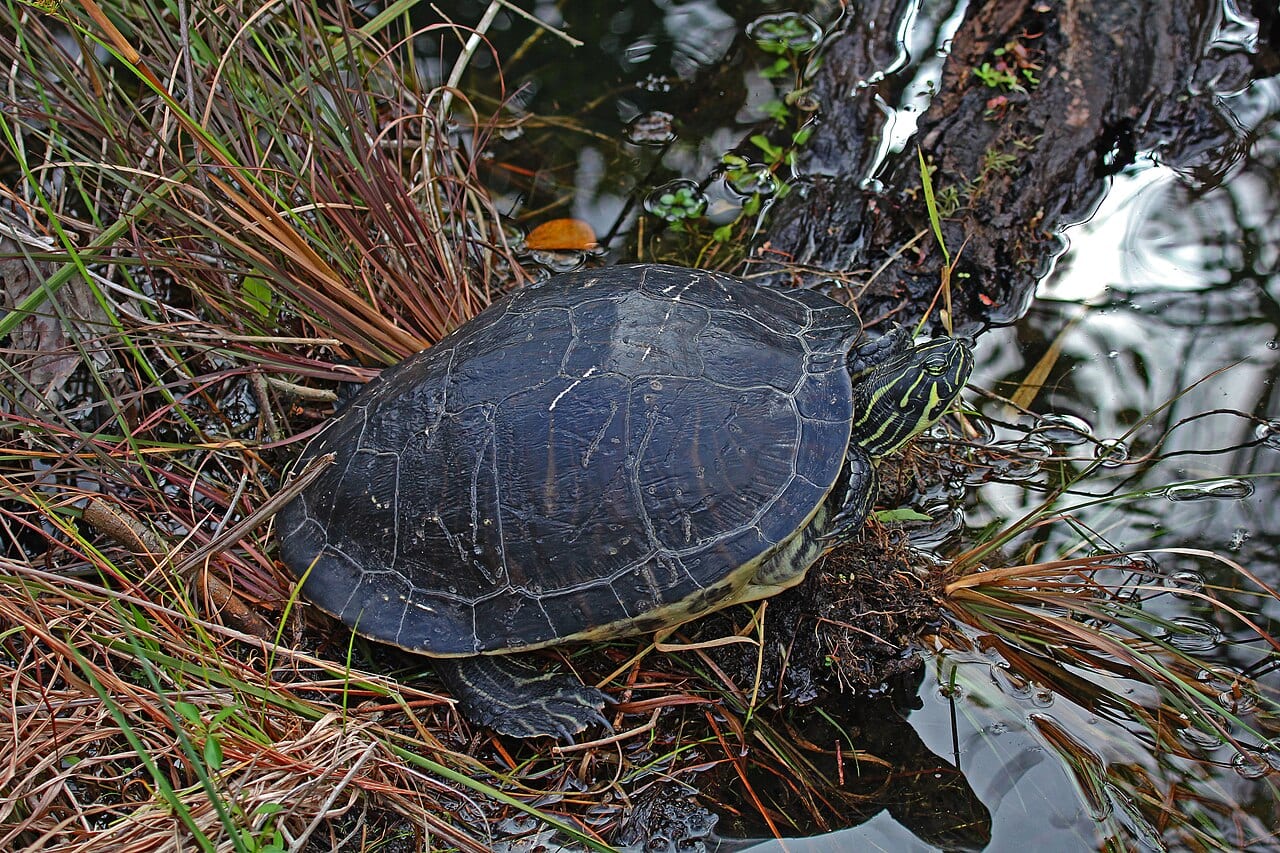
Florida red-bellied cooters are large native freshwater turtles that spend much of the day basking on logs, banks and floating vegetation.
They occur throughout peninsular Florida and favor permanent water such as ponds, canals, lakes, marshes and slow-moving rivers.
The shell gives this species its name.
The dark upper shell often carries reddish, orange or yellow-orange vertical markings, while the underside can show warm red-orange coloration, especially in younger animals.
Like other cooters, the head and limbs carry pale yellow or cream stripes.
From a distance, however, cooters can be difficult to separate from one another and from nonnative sliders.
That is one reason Wild Suncoast treats identification as a field-guide problem rather than guessing from one blurry pond photo.
Florida law currently prohibits taking any cooter in the genus Pseudemys from the wild.
The rule protects imperiled Suwannee cooters and similar-looking native cooters, including the Florida red-bellied cooter.
If a cooter is crossing a road and you can help safely, move it only in the direction it was already traveling and release it once it is out of immediate danger.
Do not relocate it to another pond.
Florida red-bellied cooters are also among the turtle species in which Turtle fraservirus 1 has been detected.
If you find a sick or dead freshwater turtle, report it rather than transporting it.
The Wild Suncoast clue is the combination of a large basking turtle, yellow head stripes and warm reddish-orange markings on the shell or underside. |
Cooter in the road? Help only if it is safe.
All Florida cooters are currently protected from wild take.
0 Comments
Join the conversation
Be the first to comment
Share your thoughts above.