
Eastern Glass Lizard: The Florida 'Snake' With Eyelids |
This harmless native reptile has no legs, but it is a lizard — look for movable eyelids, visible ear openings and a long brittle tail. |
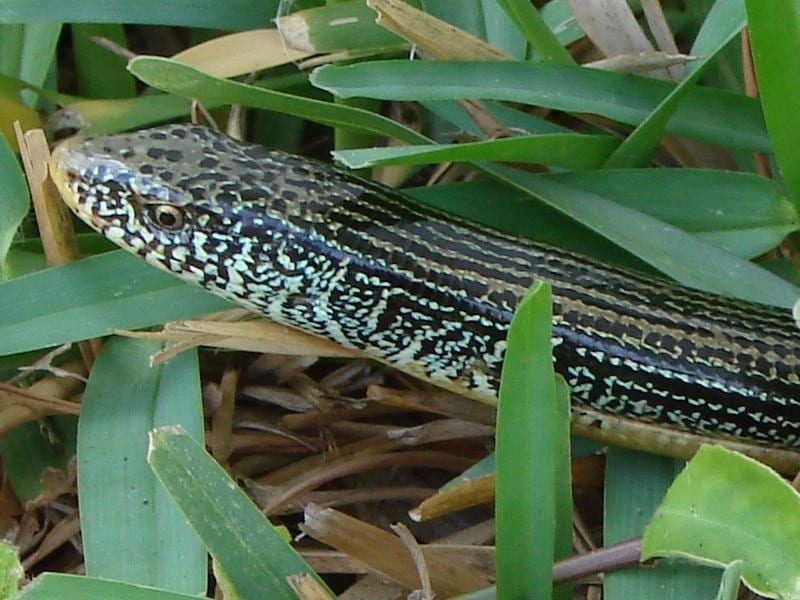
Eastern glass lizards are one of Florida’s best reminders that “no legs” does not automatically mean snake.
This native reptile can grow several feet long and is often found in sandy ground, pine flatwoods, grassy areas, dunes and suburban yards.
The easiest clues are on the head.
Glass lizards have movable eyelids and visible external ear openings, while snakes have neither.
The body is long, smooth and somewhat stiff because small bony plates reinforce the scales.
The “glass” name comes from the tail.
When threatened, a glass lizard can break off part of its tail, which may continue wriggling while the animal escapes.
The tail can regenerate, although the regrown section may not look exactly like the original.
Eastern glass lizards spend much of their time hidden in vegetation, loose soil or leaf litter, where they hunt insects, spiders, snails and other small prey.
They are harmless to people and should not be killed because they were mistaken for a snake.
Florida actually has several native glass-lizard species, so identifying the exact species from one quick sighting can still be difficult.
If you can see an eyelid blink or a small ear opening behind the eye, you are looking at a lizard, not a snake.
The Wild Suncoast rule is simple: photograph first, identify carefully and let native glass lizards continue on their way. |
Snake or glass lizard? Look at the face.
Do not kill a native glass lizard because it was mistaken for a snake.
0 Comments
Join the conversation
Be the first to comment
Share your thoughts above.