
Eastern Glass Lizard: Florida's Native 'Snake' That Is Actually a Lizard |
No legs does not always mean snake: movable eyelids and visible ear openings reveal this long native lizard found in Florida's sandy and grassy habitats. |
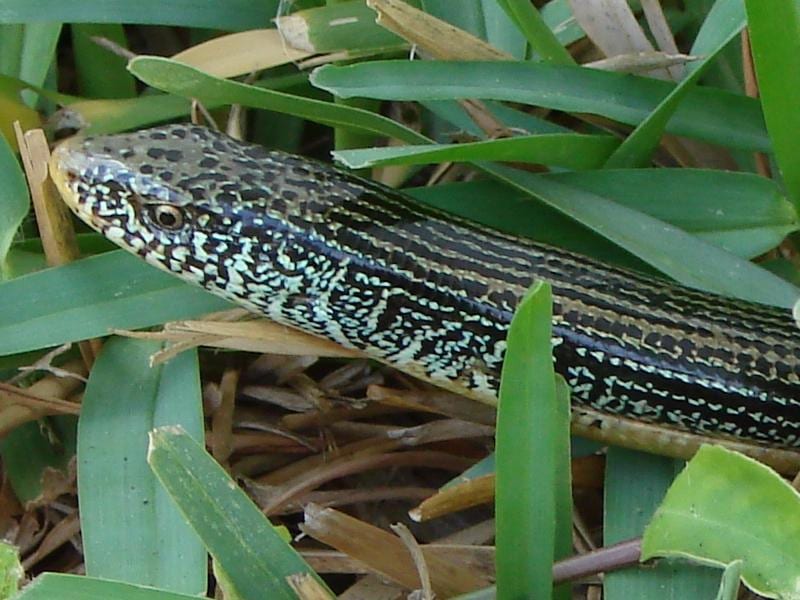
Eastern glass lizards are one of Florida’s best reminders that shape alone can fool us.
They are long, legless reptiles that can stretch to roughly three feet, so a quick glimpse in grass or mulch can easily trigger the word “snake.”
Look closely and the differences appear.
Glass lizards have movable eyelids and visible external ear openings, features snakes do not have.
Their bodies are also more rigid than a snake’s because small bony plates lie beneath the scales.
That stiffness gives them a somewhat choppier way of moving across the ground.
The name “glass lizard” comes from a remarkable defense.
When seized or threatened, the long tail can break at specialized fracture points and continue wriggling while the lizard escapes.
The tail can regrow, but losing it costs the animal energy, which is another good reason not to grab or chase one.
Eastern glass lizards spend much of their time hidden in leaf litter, loose soil, grasses and low vegetation where they hunt insects, spiders and other small prey.
They use both dry sandy habitats and wetter flatwoods and can occur in dunes, gardens and other places with enough cover.
This is a native Florida lizard, not an invasive snake.
UF/IFAS has documented eastern glass lizards in Florida landscapes, including Sarasota-area educational material about common and lesser-known local lizards.
If you find one while gardening, the best response is usually to let it disappear back into cover.
It is not venomous, and it does not need to be killed because it resembles a snake.
A clear photograph showing the head is often enough to reveal the ear opening or eyelid that solves the mystery.
The Wild Suncoast clue: no legs + eyelids + visible ears equals a lizard, not a snake. |
Snake or legless lizard? Look for eyelids and ears.
Do not grab the tail.
Glass lizards can drop and break their tails as a defense.
0 Comments
Join the conversation
Be the first to comment
Share your thoughts above.