
Cuban Treefrog: The Invasive Frog Eating Florida's Native Treefrogs |
Big toe pads, bumpy skin and oversized body are warning signs — because this invasive frog preys on native treefrogs and can turn up around homes, lights and plumbing. |
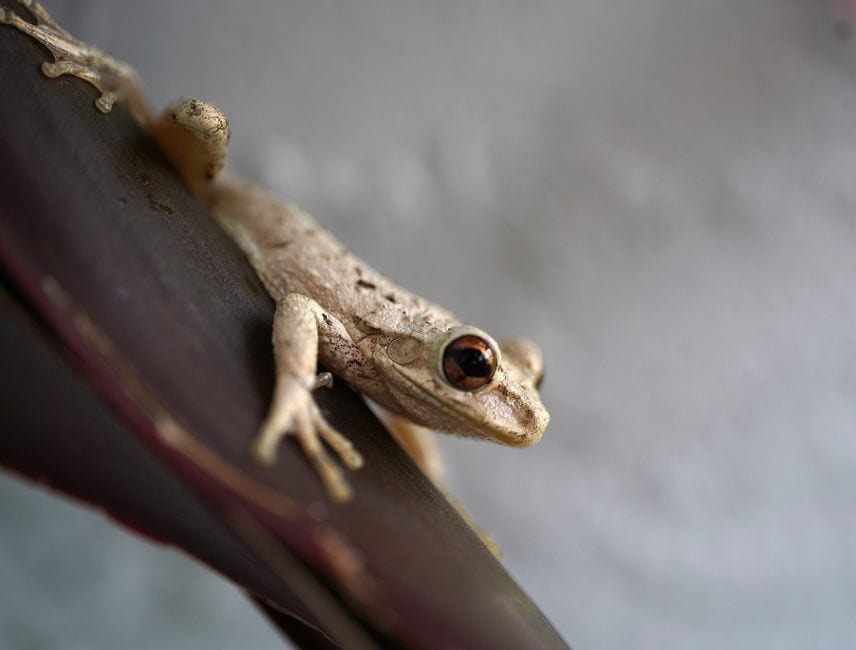
Cuban treefrogs are one of the most recognizable invasive amphibians in Florida once you know what to look for.
They are larger than most of Florida’s native treefrogs, with adults often exceeding three inches and some reaching about five inches long.
Oversized toe pads are one of the best clues.
The pads are noticeably wider than the toes, helping these frogs cling to windows, stucco, pipes and smooth surfaces around homes.
The skin is often irregularly bumpy or warty, and color can range from pale cream to tan, gray, brown or greenish shades.
Color alone is not enough for identification.
Native green and squirrel treefrogs can also change color, which is why size, skin texture and toe-pad shape matter more.
The ecological problem is predation.
Cuban treefrogs eat native frogs, small lizards and other wildlife, and research in Florida has linked their presence with declines in some native treefrog populations.
Squirrel treefrogs appear especially vulnerable because they are small enough to become prey, and Cuban treefrog tadpoles can also prey on native tadpoles.
They are now established throughout much of peninsular Florida and commonly show up around porch lights, swimming pools, ornamental plants and roof or plumbing openings.
Handle them carefully if identification is certain.
Their skin secretions can irritate eyes and mucous membranes, so avoid bare-hand contact and wash thoroughly after accidental exposure.
Because native frogs can look similar, do not remove or kill a frog unless you are confident it is a Cuban treefrog.
If you are uncertain, take a clear photograph from several angles and compare the toe pads, skin and body size with an official identification guide.
The Wild Suncoast rule is simple: identify first, act second. |
Not sure whether it is a Cuban treefrog?
Confirm the species first.
Large toe pads, bumpy skin and oversized body are better clues than color alone.
0 Comments
Join the conversation
Be the first to comment
Share your thoughts above.