
Common Snapping Turtle: Florida’s Native Freshwater Turtle With a Powerful Bite |
This native turtle is built for defense on land, and Florida law currently protects snapping turtles from wild take because of their resemblance to imperiled alligator snapping turtles. |
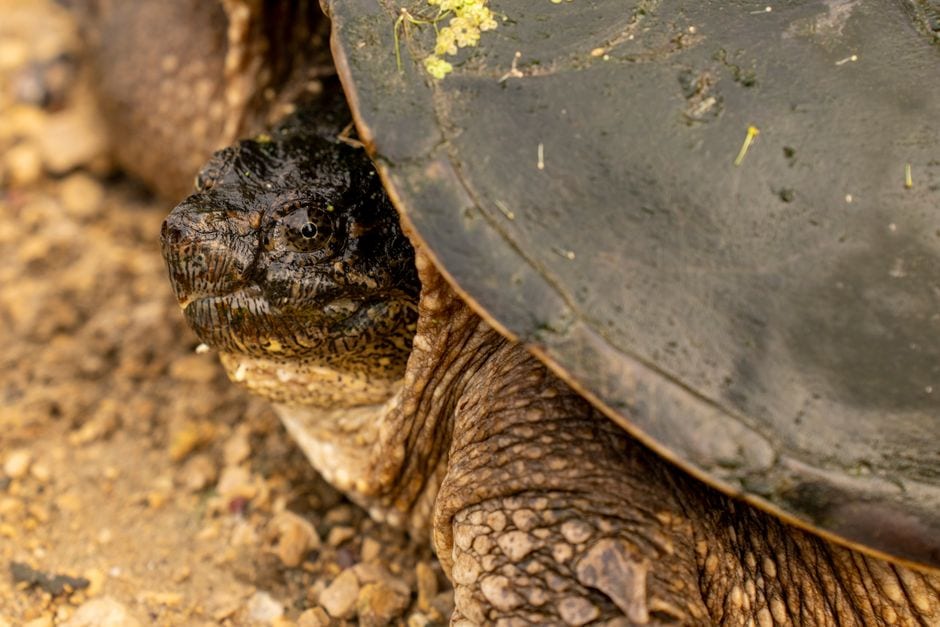
Common snapping turtles are native freshwater turtles that can look intimidating when they leave the water, but most of that attitude is defensive.
In ponds, canals, marshes and slow-moving water, they usually stay submerged and avoid people.
On land, however, a snapping turtle cannot pull its head fully into its shell and may lunge or snap when it feels cornered.
That powerful bite is why this is not a turtle to pick up casually.
The safest choice is usually to give the animal room and let it continue in the direction it was already traveling.
If a road crossing creates an immediate danger and you can help without putting yourself in traffic, do not grab the turtle by the tail.
Tail-lifting can injure the animal’s spine and soft tissues.
A wide shovel, sturdy board or other barrier can sometimes be used to guide a snapping turtle from behind without putting hands near the head.
Never move a turtle to a different pond because the place it is heading does not look right to you.
Florida currently prohibits taking snapping turtles from the wild.
That protection exists in part because common snapping turtles can be confused with imperiled alligator snapping turtles.
Snapping turtles are also among the Florida freshwater turtles in which Turtle fraservirus 1 has been detected.
If a turtle looks sick, has unusual discharge or is dead, report it rather than transporting it.
For Wild Suncoast readers, the practical rule is simple: watch the head, keep hands away, help only when necessary and never relocate the animal. |
Snapping turtle in the road? Give it room.
Keep hands away from the head and never lift a snapping turtle by the tail.
0 Comments
Join the conversation
Be the first to comment
Share your thoughts above.