
Brown Pelican: Florida's Year-Round Coastal Diver |
Brown Pelicans are the plunge-divers of Florida’s coast, dropping headfirst after fish while their giant white cousins feed very differently. |
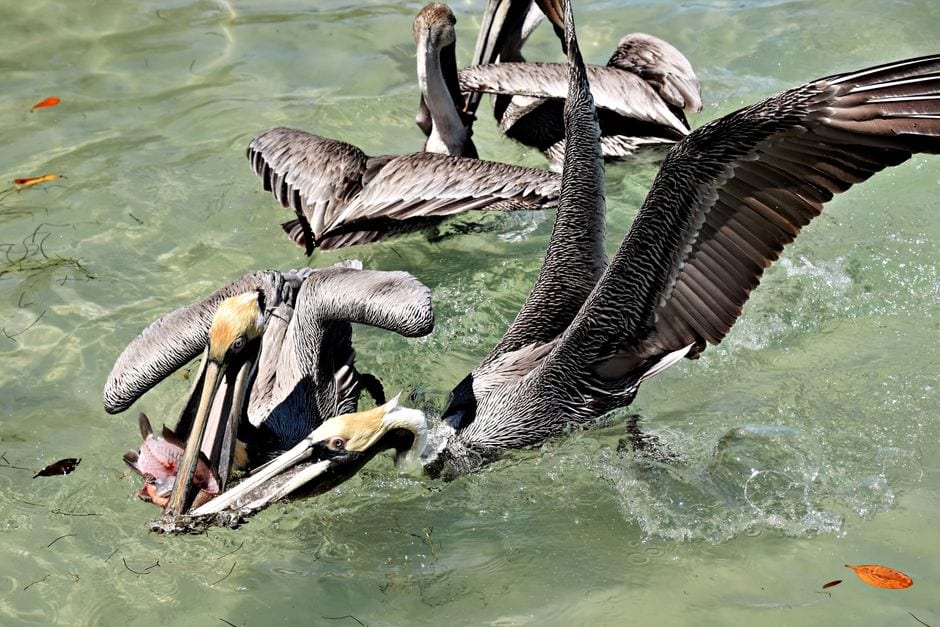
Brown Pelicans are part of the everyday scenery along Florida’s Gulf Coast, but the way they fish makes them anything but ordinary.
These large coastal birds often cruise just above the water, then climb and plunge headfirst after fish near the surface.
That diving behavior is one of the easiest clues to their identity. American White Pelicans usually feed from the surface, often working together, while Brown Pelicans make dramatic aerial dives.
Brown Pelicans are grayish-brown overall with long bills and expandable throat pouches.
Adults can show brighter head and neck colors during breeding season, while young birds are much browner and can have a pale belly.
They use beaches, docks, sandbars, mangrove islands, estuaries and other coastal habitats and are widespread around Florida’s shores.
In Florida, many Brown Pelicans nest in mangroves. Colonies can contain large numbers of pairs, so nesting islands and roosts should be given plenty of space.
Fishing areas create another important human connection.
Discarded monofilament line and hooks can injure pelicans and other water birds. Anglers should retrieve loose line whenever it can be done safely and use line-recycling containers when available.
Feeding pelicans around docks and cleaning stations can also encourage birds to crowd people and fishing gear.
The easy identification: a large brown-gray pelican dropping headfirst into coastal water after fish is almost certainly Florida’s familiar Brown Pelican. |
Want the official Florida Brown Pelican guide?
Watch the plunge-dive.
Open the Florida species guide for the full profile.
0 Comments
Join the conversation
Be the first to comment
Share your thoughts above.