
Broad-Winged Hawk: The Fall Migrant That Travels in Giant Kettles |
Most Broad-winged Hawks are long-distance migrants, riding thermals south in fall and sometimes gathering by the hundreds or thousands in swirling groups called kettles. |
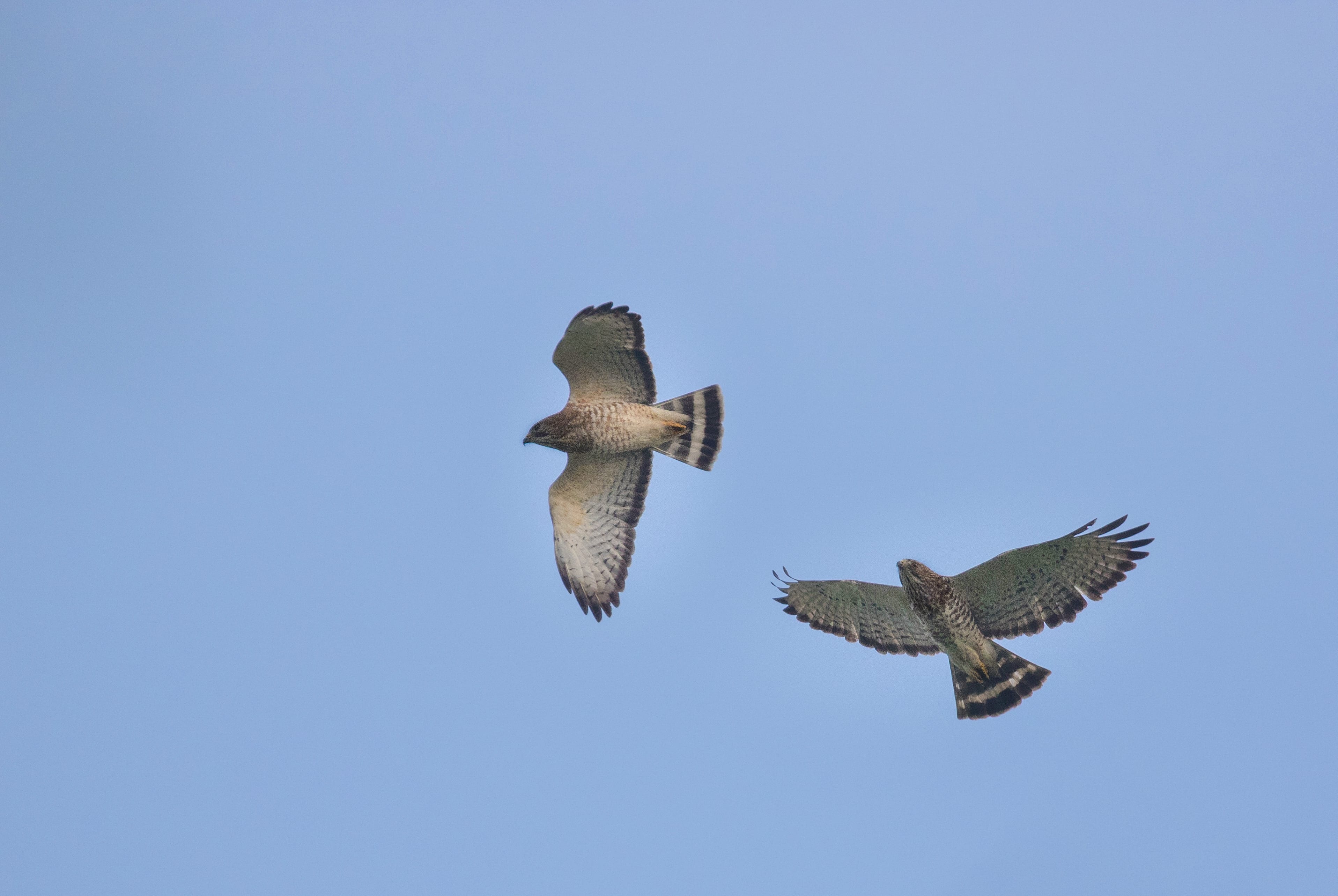
Broad-winged Hawks can be hard to notice in summer forests, but fall migration can turn them into one of the most spectacular raptor movements in the Americas.
Instead of traveling alone, migrating Broad-winged Hawks often gather in groups called kettles. The birds circle upward together on columns of rising warm air, then glide toward the next thermal without spending much energy flapping.
A kettle may contain a handful of hawks or hundreds — and major migration sites can see thousands moving through in a day.
Most are headed a very long way. Broad-winged Hawks breeding in the eastern United States and Canada migrate around the Gulf of Mexico and continue into Central and South America.
Cornell tracking research found individual birds traveling thousands of miles to wintering grounds in northern South America.
Some immature Broad-winged Hawks do winter in South Florida and the Florida Keys, but most continue farther south.
Adults are compact buteos with broad wings and a short tail marked by bold dark-and-white bands. Juveniles are browner and more streaked.
October is a migration month. When weather and thermals line up, the best clue may not be one perched hawk but a group of raptors circling high together before streaming south.
The fall takeaway: if you see a swirling column of hawks climbing on a sunny fall day, stop and look carefully. You may be watching a Broad-winged Hawk migration kettle on its way toward the tropics. |
See hawks circling together high overhead?
Look for compact broad-winged hawks with boldly banded tails.
Open Cornell’s live guide for migration, ID and range.
0 Comments
Join the conversation
Be the first to comment
Share your thoughts above.