
Broad-Headed Skink: Florida’s Big Native Lizard With the Orange-Red Head |
Adult males can reach about a foot long and develop a striking orange-red head, while females and youngsters can look much more like other native five-lined skinks. |
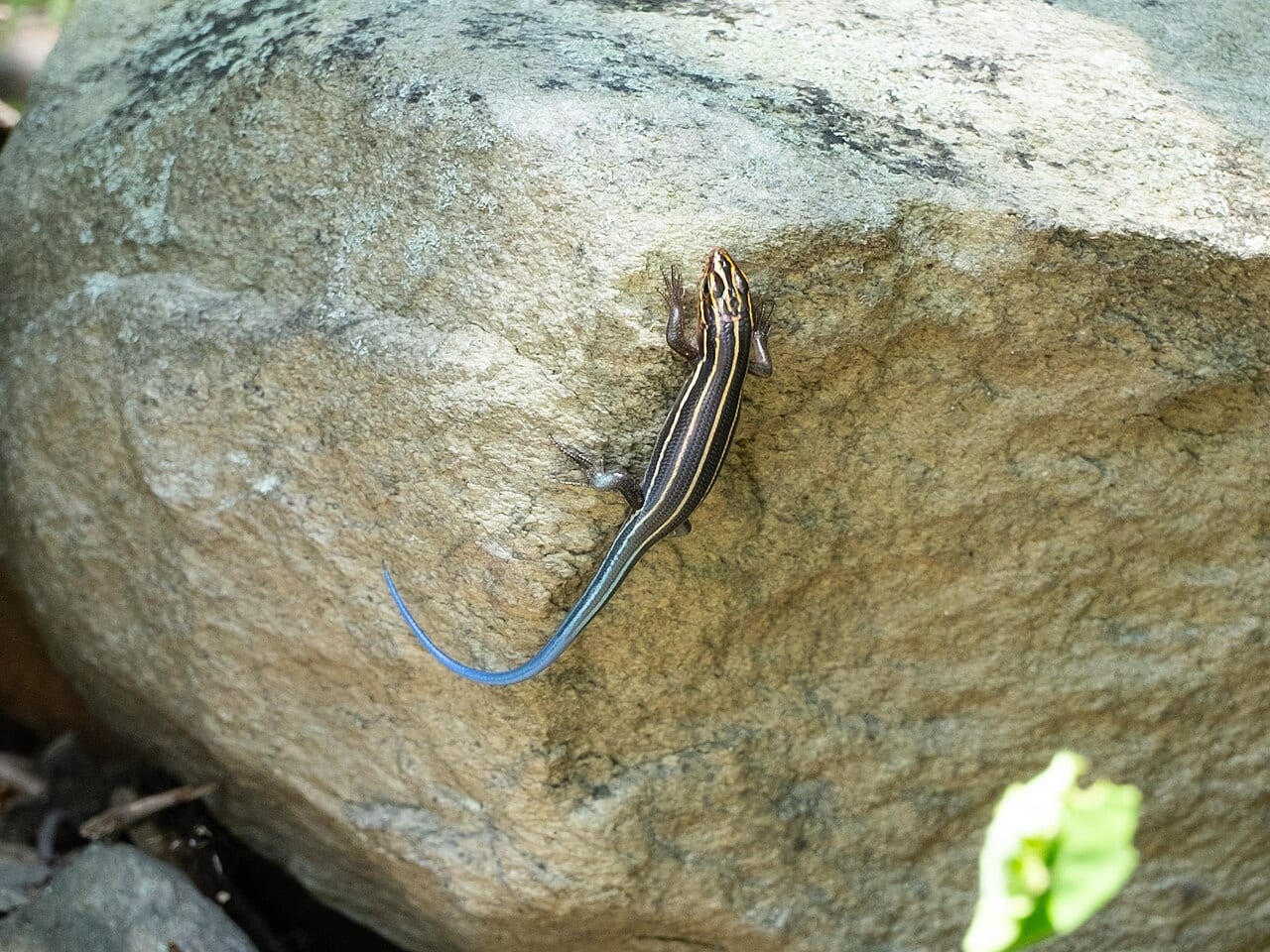
Broad-headed skinks are among Florida’s largest native skinks, and an adult male can look dramatically different from the blue-tailed youngster people remember.
Mature males can grow to roughly a foot long and often develop a broad orange-red head during the breeding season.
The body is smooth, heavy and brown to olive, with short legs and a long tail.
Young broad-headed skinks look much less distinctive.
Juveniles are dark with five pale stripes and a vivid blue tail, which makes them look very similar to young southeastern five-lined and common five-lined skinks.
That is why a quick photograph of a small blue-tailed skink may not be enough for an exact species identification.
UF/IFAS notes that separating the similar skinks can require close examination of scale patterns.
Broad-headed skinks are often associated with wooded habitat, logs and trees, and adults can spend more time climbing than many other Florida skinks.
They feed on insects, spiders and other small animals, making them useful native predators around wooded yards.
They are not venomous and are not a threat to people.
Like many lizards, they may drop part of the tail when grabbed, so handling should be avoided.
The orange-red head can make an adult male look exotic, but this is native Florida wildlife.
The Wild Suncoast clue: a very large, smooth-bodied skink with a broad reddish head strongly suggests an adult male broad-headed skink, while juveniles deserve a more cautious identification. |
Big red-headed lizard in a Florida yard? It may be native.
Do not assume the unusual color means the lizard is invasive.
0 Comments
Join the conversation
Be the first to comment
Share your thoughts above.