
Black-Crowned Night-Heron: The Stocky Florida Heron That Comes Out After Dark |
Short-necked, red-eyed and most active around dusk and night, this compact heron can hide in plain sight around Florida wetlands during the day. |
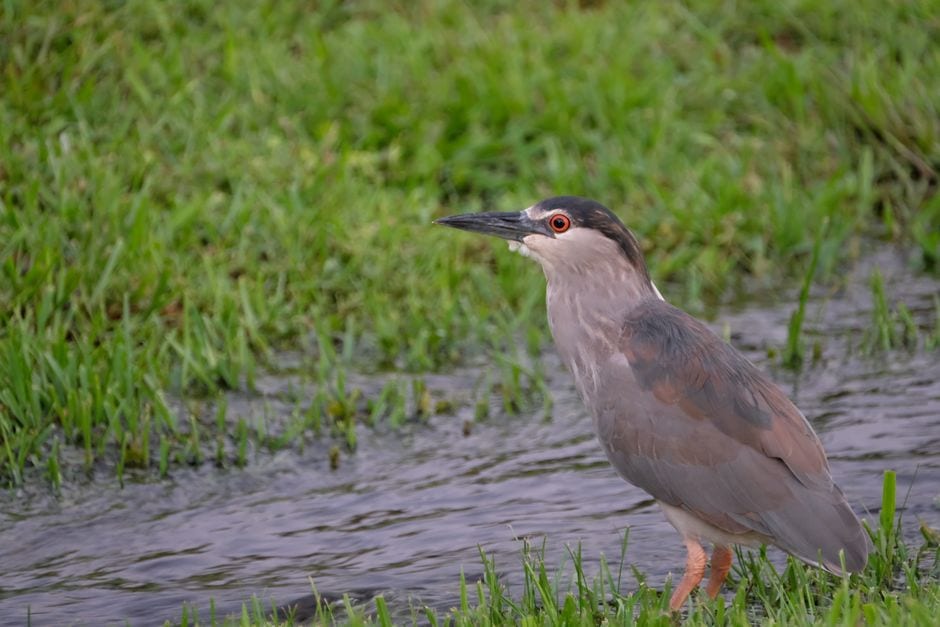
Black-crowned Night-Herons are built very differently from the tall, long-necked herons people usually notice first.
They are stocky, compact birds with short necks, broad wings and thick bills.
Adult birds have pale gray bodies, black backs and crowns, bright red eyes and long white head plumes during breeding condition.
Juveniles look almost like a different species. Young birds are brown with heavy streaking and large pale spots across the wings.
Black-crowned Night-Herons spend much of the day resting quietly in dense vegetation or on shaded branches near water.
At dusk, they become much easier to notice as they leave daytime roosts to feed along marshes, ponds, shorelines and mudflats.
Fish make up much of the diet, but they also eat crustaceans, insects, frogs and other small animals.
They frequently nest in colonies with other herons, egrets and ibises and occur in both fresh and saltwater wetlands.
Southwest Florida protected nesting areas such as Big Carlos Pass include Black-crowned Night-Herons among their focal birds.
The easy identification: a compact gray-and-black adult heron with red eyes, especially around dusk, is likely a Black-crowned Night-Heron. |
Night heron or something else?
Dusk is one of the best times to look.
Open the field guide to compare adults and juveniles.
0 Comments
Join the conversation
Be the first to comment
Share your thoughts above.