
Big Black Snake in the Yard? It May Be a Florida Native |
A large black snake may be a harmless native — and an eastern indigo snake is federally threatened and worth reporting. |
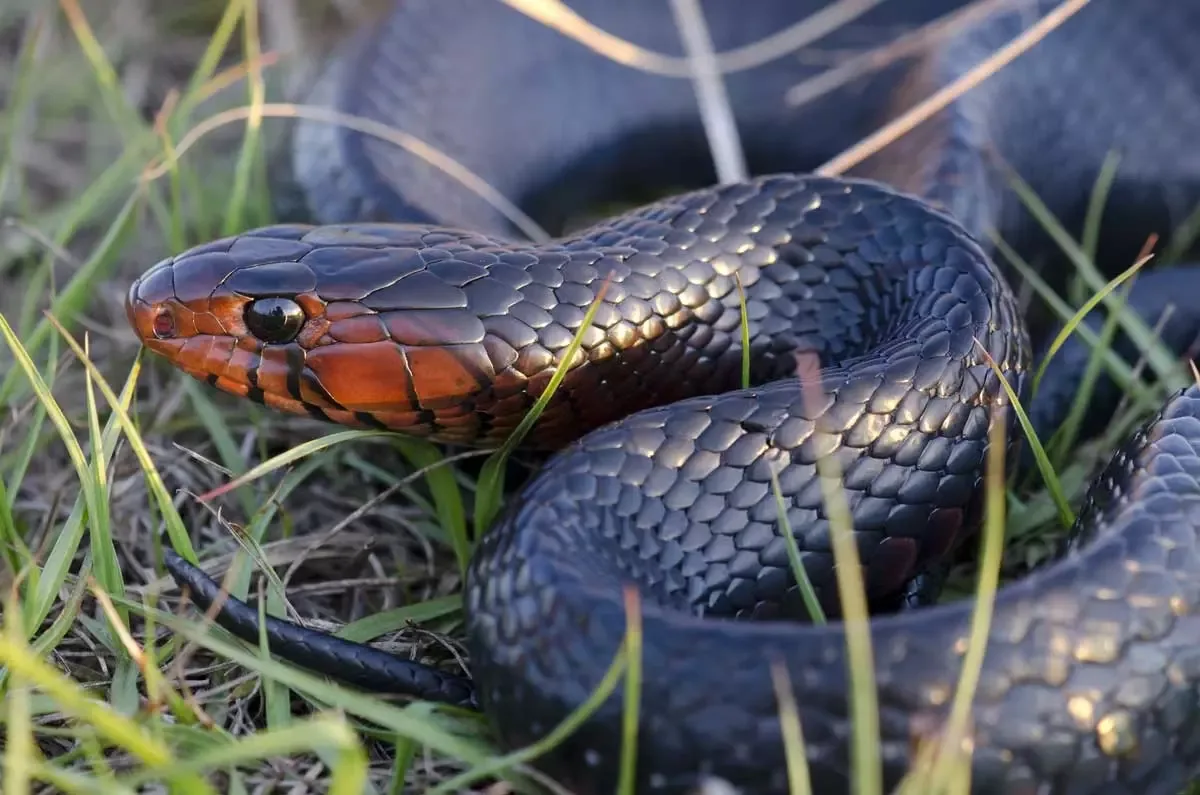
A long black snake moving through a Florida yard can look intimidating, but black does not mean venomous.
Florida has several native snakes that can look dark or black, including the North American racer and the eastern indigo snake. The safest response is not to identify one by color alone.
The eastern indigo snake is nonvenomous and federally threatened. Adults are large, thick-bodied and glossy blue-black, often with reddish, orange or cream coloring on the chin and throat. Florida wildlife sources note that adults commonly reach five to nearly seven feet, with exceptional individuals exceeding eight feet.
The eastern indigo uses many Florida habitats, including scrub, pine flatwoods, hammocks and wetland edges. It is also strongly associated with gopher tortoise burrows, which can provide refuge.
A black racer can look similar at a glance. Racers are typically slimmer, faster-moving and have a white chin and throat. The indigo is generally stockier and has the distinctive glossy blue-black sheen.
Those clues are useful from a safe distance or in a clear photograph. They are not a reason to handle the snake or move closer.
If the snake is outdoors and has an escape route, let it continue on its way. Keep children and pets back. FWC advises people to stand back and observe snakes rather than trying to catch or kill them.
If you believe you have seen an eastern indigo snake, take a photo only if you can do so safely. FWC asks the public to report suspected sightings through its rare-snake reporting program because verified records help biologists understand the species’ current distribution.
The practical takeaway: a big black snake can be a harmless native — and if it is an eastern indigo, it is a protected species whose sighting may be useful to Florida researchers. |
Think it may be an eastern indigo snake?
Think it may be an eastern indigo snake?
FWC asks residents to report suspected sightings of this federally threatened species. Take a photo only from a safe distance.
0 Comments
Join the conversation
Be the first to comment
Share your thoughts above.