
Alligator in the Pond: When to Watch and When to Call |
A Florida pond sighting is not automatically an emergency. Here’s how to tell when to keep your distance — and when to call FWC. |
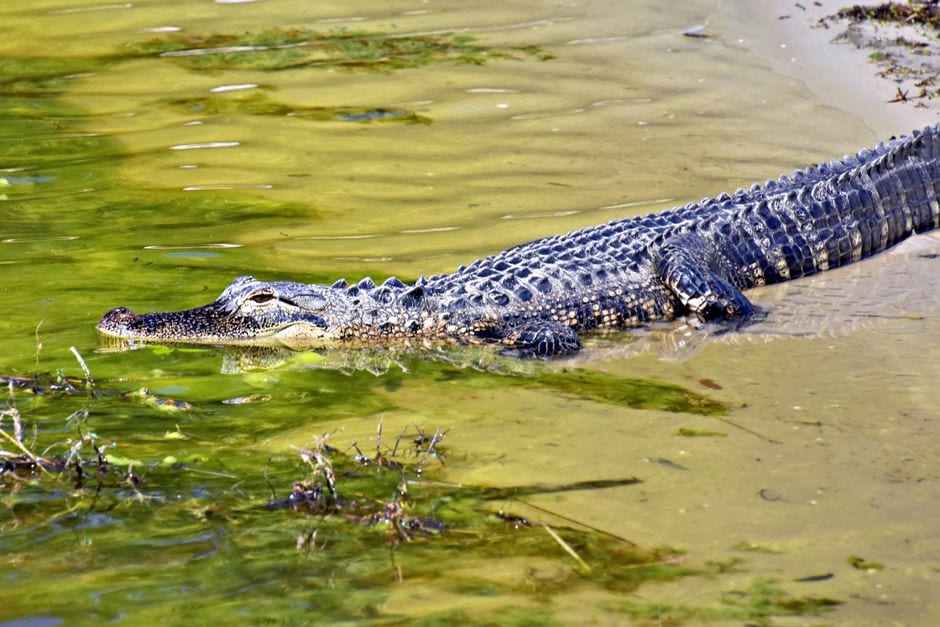
An alligator stretched along the bank of a neighborhood pond can look alarming, but in Florida the sighting itself is not what makes an animal a nuisance.
The more useful question is what the alligator is doing — and whether it appears to pose a threat to people, pets or property.
American alligators live throughout Florida, including ponds, canals, lakes, marshes and other fresh or brackish water. The Florida Fish and Wildlife Conservation Commission says serious injuries are rare, but conflict becomes more likely when people get too close, allow pets near the shoreline or teach an alligator to associate humans with food.
Start with distance.
If an alligator is simply swimming across a pond, sunning on the opposite bank or moving through normal habitat, give it room and do not try to approach it for a photograph.
FWC’s Statewide Nuisance Alligator Program generally considers an alligator a nuisance when it is at least 4 feet long and a caller believes it threatens people, pets or property. Smaller alligators can still require removal when they end up somewhere they cannot safely remain, such as a swimming pool, garage or porch.
Do not use the 4-foot guideline as a reason to get closer and estimate size.
If the animal’s behavior or location concerns you, stay back and let FWC make the determination.
Pets need extra protection around the water.
FWC advises keeping dogs on a leash and away from the water’s edge because pets can resemble natural prey. Do not allow pets to swim in fresh or brackish water where alligators may be present.
People should swim only in designated swimming areas during daylight hours. Alligators are generally more active between dusk and dawn.
Never feed an alligator.
Feeding is both dangerous and illegal. An alligator that learns to associate people with food can lose its natural wariness, creating a risk for everyone who uses the same pond, canal or shoreline later.
That also means avoiding indirect feeding. Fish scraps, bait and other food left at the water’s edge can draw wildlife close to places where people and pets gather.
When should you call?
If you believe an alligator poses a threat to people, pets or property, call FWC’s toll-free Nuisance Alligator Hotline at 866-FWC-GATOR (866-392-4286).
When a complaint meets the program’s criteria, FWC can dispatch a contracted nuisance alligator trapper. The property owner or management authority must be able to grant legal access to the location where the animal is present.
Do not attempt to trap, move, touch or handle an alligator yourself — even a small one.
If a person is being attacked or has been injured, call 911 for emergency help.
The practical rule is simple: a normal sighting calls for distance and awareness; threatening behavior or an alligator in an unsafe location calls for FWC.
That distinction lets residents live around one of Florida’s most familiar native animals without turning every pond sighting into a crisis — or ignoring a situation that genuinely needs attention. |
Concerned about an alligator?
Concerned about an alligator?
If you believe it threatens people, pets or property, call FWC’s Nuisance Alligator Hotline: 866-FWC-GATOR (866-392-4286).

0 Comments
Join the conversation
Be the first to comment
Share your thoughts above.